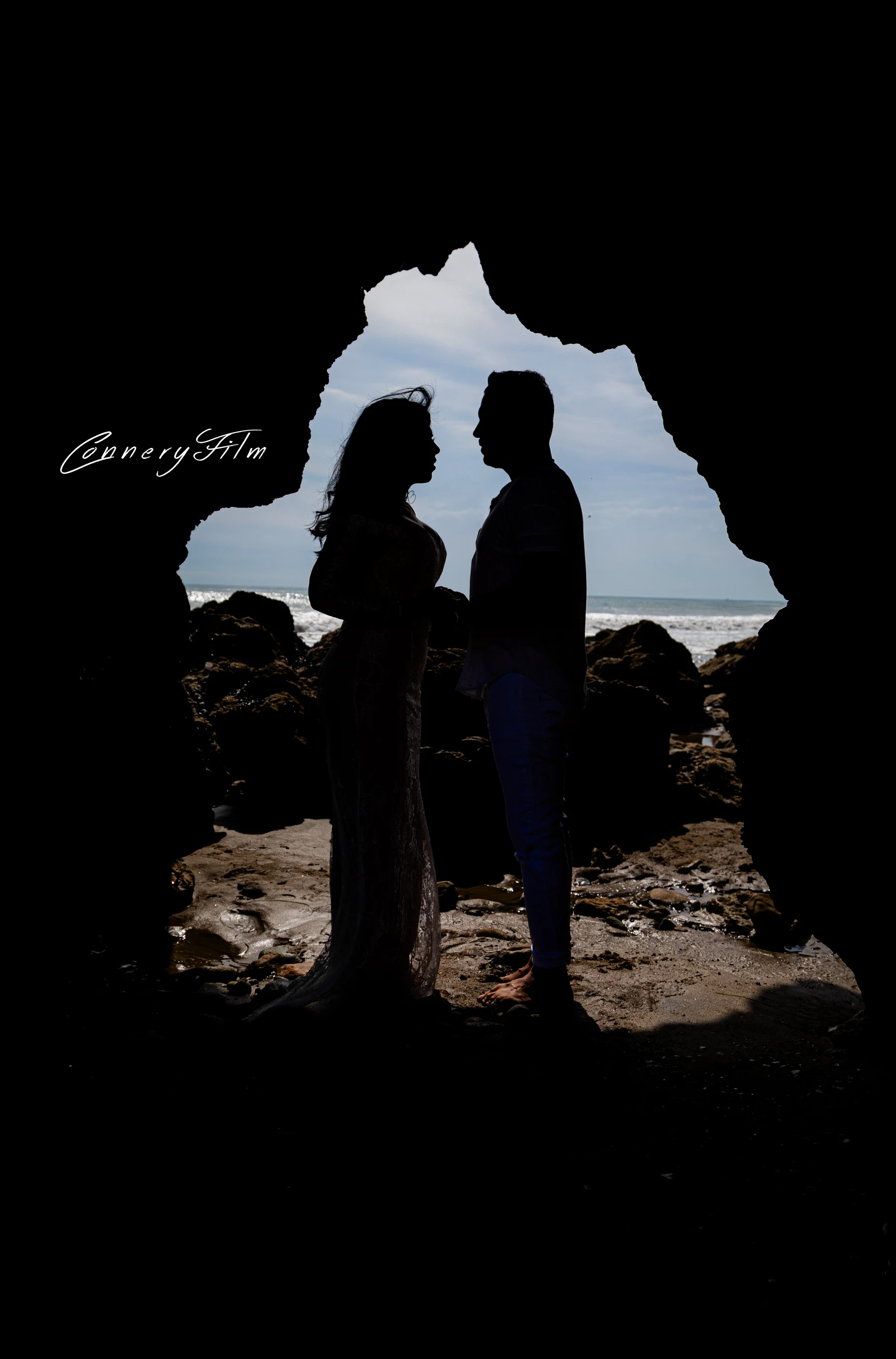
Couples ask me about the latest camera for wedding photography more often than you'd think. Usually it comes up at the end of a consultation in Los Angeles, almost apologetically: "So... what do you shoot on? Is it the newest one?" It's a fair question. You're about to trust someone with the one day you can't redo, and gear feels like something you can actually check. So here's the straight answer, then the more useful one.
The straight answer: as of fall 2026, the newest full-frame bodies working photographers are actually carrying to weddings are cameras like the Canon EOS R5 Mark II and R6 Mark III, the Sony a7 V and a1 II, and the Nikon Z8 and Z6III. Any of them is more camera than a wedding needs. The more useful answer is that the release date on the body is close to the bottom of the list of things that decide how your photos look.
I'll be blunt: a 2026 camera won't fix a 2019 photographer
I've been photographing and filming weddings for 17 years. In that time I've watched cameras go from struggling at ISO 3200 to shooting clean at ISO 12,800, from single-point autofocus I had to aim by hand to eye-tracking that locks onto a bride's eye through a veil. Those jumps were real. They made my job easier.
But here's what I've also watched: photographers buying the newest body every cycle and delivering galleries that look exactly the same as before. Flat group formals. Blown-out skies at a Malibu cliffside ceremony at 3 PM. Faces half in shade under the oak trees at a Calabasas estate. None of that is a camera problem. It's light, timing and direction, and no firmware update touches it. I wrote a whole piece on why LA golden hour lasts about 25 minutes, and that 25 minutes matters more than any spec sheet.
Honestly, I think couples who pick a photographer because they own the newest camera are shopping for the wrong thing. Look at full galleries, not gear lists.
What the newest cameras genuinely do better
I don't want to pretend gear is irrelevant either. Newer bodies do help in a few specific, real-world ways that show up at LA weddings:
- Autofocus in bad light. The current generation of subject-detection AF holds focus on eyes in dim reception halls, candle-lit dinners in Downtown LA lofts, and backlit sunset portraits on the bluffs in Palos Verdes. Ten years ago I'd lose a percentage of dance-floor frames to missed focus. Now it's close to zero.
- Silent electronic shutters without the old artifacts. Stacked and partially stacked sensors (the a1 II, R5 Mark II, Z8, and now the a7 V's partially stacked sensor) read out fast enough that a fully silent shutter no longer warps a swinging arm or bands under LED uplighting. That matters in churches and synagogues where the officiant asks for no shutter noise during vows.
- Cleaner high ISO. Shooting at ISO 6400 to 12,800 inside an Arts District warehouse at 9 PM is now usable without a flash blasting everyone. I still bring off-camera light, but I reach for it by choice.
- Dual card slots and better batteries. Every serious wedding body now records to two cards at once. If one card fails, your ceremony still exists. A single-slot camera at a wedding is a red flag, new or old.
- Photo and video from one body. The newest hybrids shoot 4K or 8K video that cuts cleanly with cinema footage. That's a big part of why photo and film can come from one team now.
The cameras I'd call "current" for weddings right now
If you want names, here's where things stand. Approximate body-only prices, since they move around with promotions:
- Canon EOS R5 Mark II (about $4,300): 45 megapixels, excellent eye AF, strong video. A workhorse for a lot of LA wedding shooters.
- Canon EOS R6 Mark III (about $2,800): the newer mid-tier Canon, a common second body.
- Sony a7 V (about $2,900): Sony's newest mainstream full-frame, with the faster partially stacked sensor. The a7 IV it replaces is still everywhere at weddings.
- Sony a1 II (about $6,500): flagship speed and resolution. Overkill for most weddings, lovely when you have it.
- Nikon Z8 and Z6III (about $4,000 and $2,500): the Z8 is a flagship in a smaller body; the Z6III is a very capable everyday wedding camera.
If you want the brand argument, I covered Sony vs Canon for wedding photography separately. Short version: brand is a preference, not a quality tier. I'd hire a great photographer on a four-year-old Nikon over an average one on this year's flagship every single time.
Most photographers won't say this, but lenses matter more
A camera body is replaced every three to five years. Good lenses last a decade. The look you fall in love with on someone's Instagram, the soft background, the glow, the sharp eyes, is mostly the lens and the light. A 35mm f/1.4, an 85mm f/1.2 or f/1.4, and a 24-70mm f/2.8 do more of the visual work than the sensor behind them.
When I lay out my full wedding kit, the lenses and lighting cost more than the bodies. That's normal for professionals and a decent tell when you're vetting someone: ask what lenses they use for the ceremony and portraits. A confident, specific answer is a better signal than the model number on the camera.
What I'd actually check if it were my wedding
If I were getting married in LA tomorrow and wanted to know whether a photographer's gear was good enough, I'd skip the camera question and ask these instead:
- Do you shoot with two bodies and dual card slots? The answer should be yes, without hesitation.
- What's your backup camera? Something fails at roughly one wedding in fifty for me: a jammed battery door, a dropped lens at the beach in Santa Monica. A backup body in the bag turns a disaster into a 30-second swap.
- How do you handle dark receptions? Listen for off-camera flash, bounce, or video lights, not "the camera handles it."
- Can I see a full gallery from a venue like mine? A 600-image gallery from start to finish tells you everything the gear list can't.
- How soon do files leave the venue on two drives? My rule: two copies before I go to bed, three by the next afternoon.
Every one of those answers affects your photos more than whether the body came out in 2024 or 2026.
Where "latest" really pays off: photo and film together
The one place I think new gear genuinely changed weddings is the line between photography and video. At ConneryFilm we shoot photography and cinematic film under one roof, one team moving through your day together. The newest hybrid cameras let our photo and film crew share color science, lenses, batteries and even timecode, so your highlight film and your gallery look like they came from the same day, because they did.
That matters more than any single spec. Two separate vendors on two different systems means two different color looks, two people fighting for the same spot at the end of the aisle, and two timelines to coordinate. One team with matched gear sidesteps all of it. If you're curious how I think about the gear question on the camera-choice side, my earlier post on the best wedding photography camera goes deeper into the trade-offs.
A real example from a Malibu wedding
Last summer I shot a ceremony on a bluff in Malibu at 5:30 PM. Hazy marine layer, then the sun burned through at exactly the wrong moment, straight into the couple's faces from behind the officiant. The newest autofocus kept tracking perfectly. Great. But what saved the ceremony photos wasn't the camera. It was the conversation two months earlier where I asked the planner to angle the arch 30 degrees so the sun would sit behind the guests instead of the couple. That call cost nothing and it's why those frames are soft and warm instead of squinty and blown out.
That's the pattern I see every season. The camera catches the moment. The photographer decides whether the moment is worth catching.
FAQ: latest cameras and your wedding
Should I only hire a wedding photographer with the newest camera?
No. Any professional full-frame mirrorless body from roughly the last five years, with dual card slots, is fully capable of a beautiful wedding gallery. Judge full galleries, lighting skill and backup habits instead.
Is a DSLR still OK for wedding photography in 2026?
A well-maintained DSLR in skilled hands still makes lovely wedding photos. Mirrorless bodies are better at silent shooting and low-light autofocus, so most working LA photographers have switched, but a DSLR alone isn't a reason to pass on someone whose work you love.
What's the newest camera most LA wedding photographers use?
In 2026 you'll mostly see the Canon R5 Mark II and R6 Mark III, the Sony a7 IV and newer a7 V, and the Nikon Z8 and Z6III. Flagships like the Sony a1 II and Canon R1 show up too, but they're more than a wedding needs.
Does a newer camera mean faster photo delivery?
Not really. Turnaround comes from culling and editing time, not the camera. My galleries come back in four to six weeks, with previews within about a week, and that hasn't changed with new bodies.
Can an iPhone replace a professional wedding camera?
For a few candid moments from guests, sure. For a full day with dark receptions, fast moments and big prints, no. Sensor size, lenses and a backup system still matter.
If you're planning a Los Angeles wedding and want photos and a cinematic film that feel like they came from the same beautiful day, I'd love to hear about it. Tell me your date and venue and I'll tell you honestly how I'd shoot it. Call or text 818.749.7039, or see our work and packages at ConneryFilm.com.
Meet the Author: Connery Davoodian Hello, I'm Connery Davoodian, the visionary behind ConneryFilm, and I'm thrilled to share insights from my 17-year journey through the world of wedding photography and videography. My passion extends beyond simply capturing images; it's about artfully weaving your unique love story into a timeless, cinematic masterpiece. My artistic path began long before I ever picked up a camera, deeply rooted in music as a singer, songwriter, and multi-instrumentalist. This diverse background in directing, producing, and editing has cultivated a unique perspective, allowing me to approach each wedding not just as an event, but as a dynamic narrative waiting to be beautifully told. This blend of technical mastery and creative storytelling is the heartbeat of ConneryFilm, ensuring that every frame, every shot, and every film is infused with depth, emotion, and unparalleled artistic integrity. At ConneryFilm, we believe your wedding memories deserve nothing less than bespoke luxury. My philosophy centers on capturing the authentic, unscripted moments – the genuine smiles, the tender glances, the joyful laughter – that truly define your day. While we obsess over exquisite details and sophisticated aesthetics, our true joy comes from making you feel completely at ease, like a "friendor" who genuinely celebrates alongside you. This calm, organized presence allows your true personalities to shine, resulting in images and films that are as real and vibrant as your love itself. Based in the heart of Los Angeles, California, my team and I are privileged to serve couples across the globe, bringing our signature high-end wedding photography and videography to destination weddings worldwide. Through these blog posts, I aim to share invaluable insights, luxurious inspiration, and practical, fun advice to guide you through your wedding planning journey, helping you make informed decisions about preserving your most cherished moments. Thank you for trusting ConneryFilm to be a part of your extraordinary adventure. I'm excited to share my knowledge and passion with you, helping you create memories that will last forever.