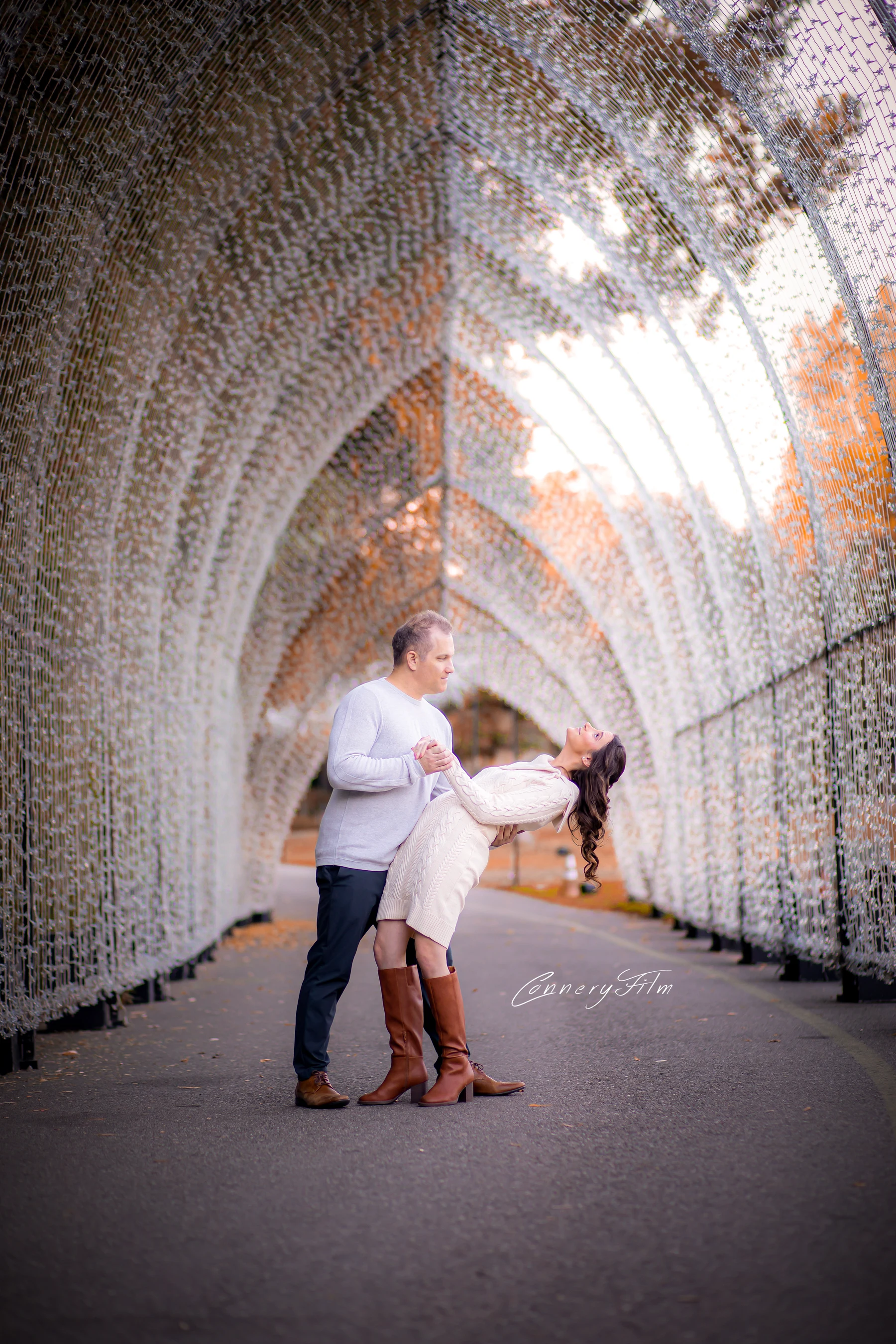
Your wedding dress choice affects your photos more than almost any other decision you make, and I'll be blunt about it: the dress you fall in love with in a bright bridal salon is not always the dress that photographs best at a Los Angeles wedding. After 17 years behind the camera, I can tell you which choices help me and which ones I end up fighting all day.
None of this means you should pick a dress for the camera instead of for yourself. You should love it. But a few small details decide whether the pictures look the way you remember the dress looking in the mirror, so let me walk you through what I actually see at real weddings.
The short answer
Fabric, color, neckline and train length change your photos in ways you can predict. Fabric decides how the dress holds light. Color decides whether skin and background separate cleanly. The neckline decides what your portraits frame. The train decides how many movement shots you get. Everything else is detail.
Fabric is the biggest factor, and nobody warns you
I shoot a lot of weddings in Los Angeles, and light here is strong. At a beach in Malibu or a rooftop downtown, sunlight bounces off everything. Fabric reacts to that light very differently.
- Matte crepe and heavy satin hold their shape and show clean lines. Great in bright sun, but a pure bright-white satin can clip, meaning the highlights lose all detail.
- Tulle and organza glow when backlit. At golden hour, a tulle skirt with the sun behind you looks like a painting. The same skirt in flat shade looks gray and thin.
- Lace needs side light. Lit from the front, the pattern disappears. Lit from the side, every piece of detail pops.
- Sequins and beading sparkle indoors but can throw hot spots outdoors at midday.
- Chiffon moves beautifully in wind, which is exactly what you want on a coastal day, and a headache in a stuffy ballroom where nothing moves.
Here's my honest opinion: if you are getting married outdoors in Los Angeles in summer, a mid-weight fabric with some body beats an ultra-thin one. Thin fabric wrinkles in the heat, clings when you sweat, and you will see it in every close-up.
White, ivory, champagne: the color question
This is where most couples are surprised. A stark, optical white dress next to a groom in a black tuxedo asks the camera to handle a huge range of brightness. A good photographer manages it, and I do, but the result still depends on the light. An ivory or soft champagne dress usually keeps detail in the highlights and looks warmer against skin.
Most photographers won't say this up front, but cool pure white can read slightly blue in shade and slightly yellow under warm reception lighting. If you are torn between two whites in the salon, take both outside and look at them in a window light. What you see there is closer to what I see through the lens.
Blush, sage and other tinted gowns are growing in popularity, and they photograph beautifully in LA gardens and vineyard settings. Just keep in mind that a color close to your skin tone can blend you into the dress in a close portrait. Contrast is your friend.
Necklines, sleeves and what the frame shows
Most of your portraits are cropped from the waist up, which means the neckline and shoulders carry the picture. A few patterns I see all the time:
- Strapless and sweetheart necklines show your collarbones and shoulders. Beautiful, but if you are self-conscious about your arms, you will notice it in every hug photo.
- Off-the-shoulder and sleeves create a natural frame. They also hide the awkward arm squeeze that happens when someone hugs you.
- High necklines look elegant and classic, and they pair well with an updo.
- Deep V and open backs make the back of the dress a real photo. I always take a few frames from behind during the ceremony, so an interesting back is a gift.
Think about your hair and jewelry together with the neckline. A statement necklace on a heavily detailed bodice is too much. I've seen it flatten both.
The train, the veil and movement shots
A cathedral train and a long veil give me some of the best images of the day, especially a walk through a garden path at The Huntington or a gust of wind on a bluff. But they also take real management. Someone has to fluff the train every time you stop, which takes time out of your portrait window.
Here's how I think about it. If you have a tight timeline, a chapel-length train is plenty. If you have time, block 30-45 minutes for couple portraits and bring a bridesmaid or your mom whose only job is to handle the train. That one person saves me ten minutes of resets.
A removable overskirt or a detachable train is something I recommend often. You get the dramatic ceremony look, and then you can dance without anyone tripping.
Can you move, sit and dance in it?
This is the part nobody puts in a Pinterest board. If you cannot lift your arms, you will not hug your grandmother naturally. If you cannot sit, you will stand awkwardly through dinner. If you cannot breathe, it shows in your face.
I watch your shoulders and your jaw more than your dress. Tension shows up in the first photos at the ceremony. A comfortable dress equals relaxed pictures. At a consultation, I tell my couples to do a full dress rehearsal at the final fitting: sit, hug, bend, raise your arms, and do a slow dance with a friend. If any of it hurts, ask the seamstress to fix it now.
Matching the dress to your venue and your light
Los Angeles gives you a wide range of venues, and the best dress for each one is different.
- Beach weddings. Lighter fabrics and shorter or detachable trains. Sand and salt water are rough on lace hems. If you are shooting at the coast, my favorite beach photo spots have a few things in common: wind, glare and wet sand.
- Garden and vineyard venues. Soft layers and tulle thrive here, and garden venues give you filtered light that loves lace.
- Historic ballrooms and hotels. Structured gowns with beading and a longer train feel right at the Biltmore or similar venues.
- Rooftops and downtown loft venues. Clean lines and bold silhouettes, because the architecture does the talking.
If you want your dress to look its best, think about where the portraits will happen. A heavy ballgown in a hot August afternoon in the Valley is a lot. A tight mermaid skirt on uneven garden paths slows everyone down.
What I would do if it were my wedding
If I were choosing a dress with photos in mind, here is what I'd do in order:
- Pick the silhouette I felt best in, because comfort shows.
- Choose ivory or a warm white before stark white.
- Pick a fabric with some structure so it doesn't wrinkle in a day of heat.
- Look at the dress outside in daylight before the last fitting.
- Plan a way to bustle the train so I could dance, and ask my photographer to see the bustle before the reception.
And my firm opinion: do not choose a dress based on how it looks in a salon with perfect lighting and a mirror in front of you. Photos happen in real conditions, from every angle, at every hour of the day.
Photographer and dress: tell us early
Send your photographer a photo of the dress ahead of time, including the back and any detail you love. I would much rather know that the beading on the back is important than discover it on the day. If you have a short list of things to tell your photographer, put the dress on it. I can plan which angles to use, where the sun needs to be, and which details to capture while you are getting ready.
Also bring the whole outfit to the getting-ready room: shoes, veil, jewelry, and any garter or something blue. These small items are the first shots of the day. They only take me 15 minutes, and they set the tone for the rest of the gallery. Because we do both photography and cinematic film, the same details end up in your video, too, so one team sees the dress from the first hanger shot to the last dance.
FAQ
Does the color of the wedding dress matter for photos?
Yes. Ivory and champagne tones keep detail in bright light and look warmer next to skin. Stark white can lose detail in strong sun and look cool or gray in shade. It's fixable in editing, but a softer tone starts closer to what you want.
What dress fabrics photograph best in Los Angeles?
Mid-weight crepe, structured satin and lace with some body hold up best in LA heat and bright light. Tulle is wonderful at golden hour. Very thin fabrics tend to wrinkle and cling, so choose them carefully for outdoor summer weddings.
Should I change my dress for a better photo?
No, not if you love the one you have. Choose the dress that makes you feel confident, because that confidence shows up in every frame. Use the ideas above to adjust small things, like the bustle, the veil or the layers.
Will a long train make photos harder?
It takes more time, not more skill. Assign one person to handle the train during portraits and plan 30-45 minutes for couple photos. With that, a long train gives you some of the most dramatic frames of the day.
Can a dress that doesn't fit well be fixed in post?
Some things can be softened in editing, but pulling fabric, a gap at the bust or a drooping hem is much easier to fix at a fitting than in Lightroom. Do a movement test at your last fitting.
If you're still choosing a dress, or you already have it and want to talk about how to photograph it at your venue, I'd love to hear from you. Call or text 818.749.7039 or visit ConneryFilm.com, and we'll plan the photos and film for your Los Angeles wedding together.
Meet the Author: Connery Davoodian Hello, I'm Connery Davoodian, the visionary behind ConneryFilm, and I'm thrilled to share insights from my 17-year journey through the world of wedding photography and videography. My passion extends beyond simply capturing images; it's about artfully weaving your unique love story into a timeless, cinematic masterpiece. My artistic path began long before I ever picked up a camera, deeply rooted in music as a singer, songwriter, and multi-instrumentalist. This diverse background in directing, producing, and editing has cultivated a unique perspective, allowing me to approach each wedding not just as an event, but as a dynamic narrative waiting to be beautifully told. This blend of technical mastery and creative storytelling is the heartbeat of ConneryFilm, ensuring that every frame, every shot, and every film is infused with depth, emotion, and unparalleled artistic integrity. At ConneryFilm, we believe your wedding memories deserve nothing less than bespoke luxury. My philosophy centers on capturing the authentic, unscripted moments – the genuine smiles, the tender glances, the joyful laughter – that truly define your day. While we obsess over exquisite details and sophisticated aesthetics, our true joy comes from making you feel completely at ease, like a "friendor" who genuinely celebrates alongside you. This calm, organized presence allows your true personalities to shine, resulting in images and films that are as real and vibrant as your love itself. Based in the heart of Los Angeles, California, my team and I are privileged to serve couples across the globe, bringing our signature high-end wedding photography and videography to destination weddings worldwide. Through these blog posts, I aim to share invaluable insights, luxurious inspiration, and practical, fun advice to guide you through your wedding planning journey, helping you make informed decisions about preserving your most cherished moments. Thank you for trusting ConneryFilm to be a part of your extraordinary adventure. I'm excited to share my knowledge and passion with you, helping you create memories that will last forever.