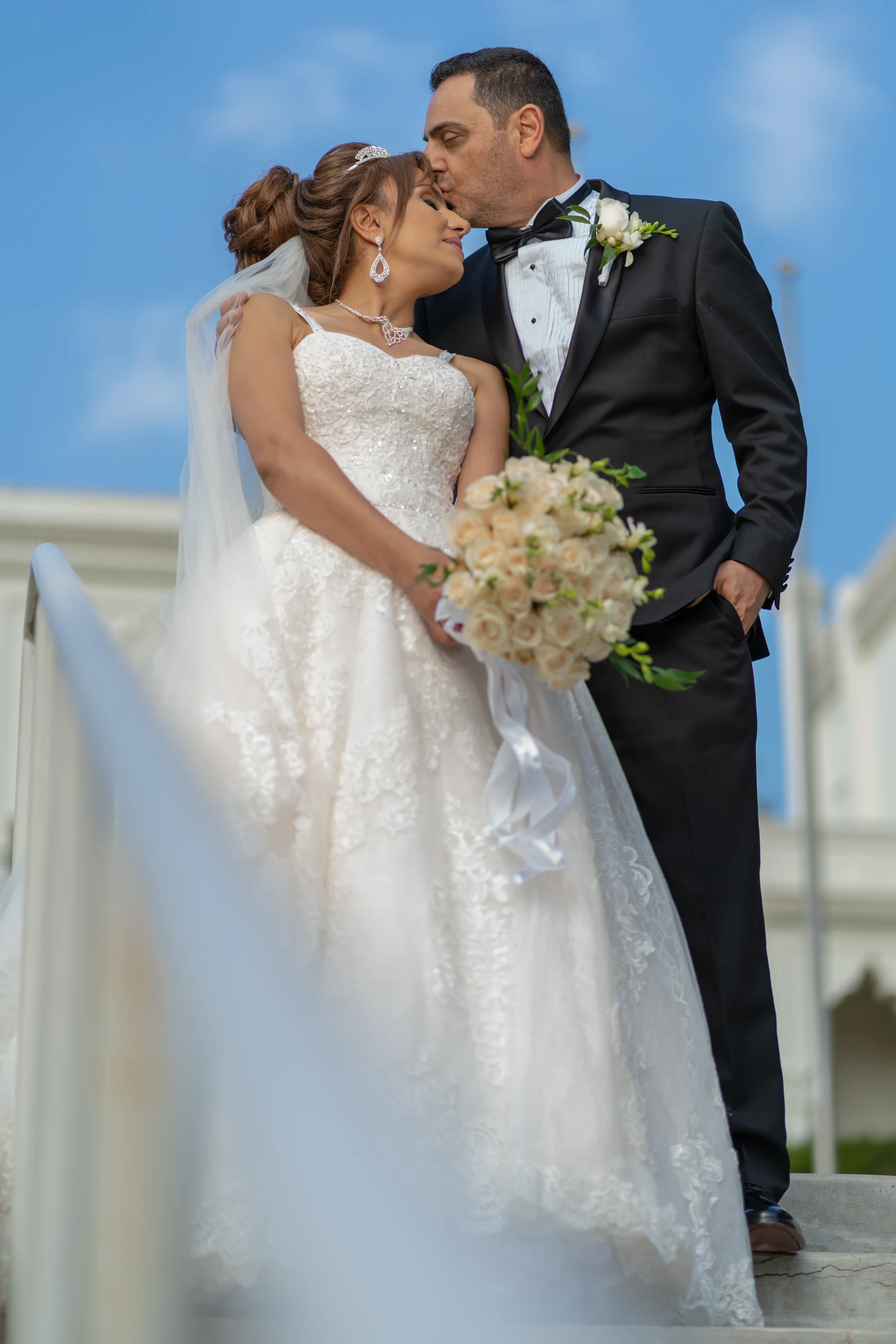
Couples ask me about wedding video trends at almost every consultation now, usually while holding up a phone with a grainy, flash-lit reel somebody posted last weekend. So here is my straight answer for Los Angeles weddings this year: the trends that are actually popular are the ones that make a film feel less produced. Raw audio, documentary pacing, a little analog texture, vertical edits you can post the week of the wedding, and longer, honest ceremony and toast coverage. The slow-motion-everything, drone-over-the-venue, dramatic-voiceover film that ruled the late 2010s is fading fast.
I've been filming and photographing weddings for 17 years, and I've watched plenty of trends arrive and disappear. Below are the seven I'm genuinely seeing my couples book right now, what each one costs or changes, and which ones I'd skip if it were my own wedding.
The short version: real beats polished
If you only read one section, read this one. The biggest shift I've seen over the last two seasons isn't a camera or an editing style. It's what couples want to feel when they watch the film five years from now. They want to hear their dad's voice crack during the toast. They want the awkward laugh when the ring wouldn't go over the knuckle. They do not want a perfume commercial.
That shows up in how couples brief me. Three years ago, the most common request was "make it cinematic." This year it's "make it feel like us." Those are not the same request, and a good videographer should hear the difference.
1. Documentary-style edits with real audio up front
This is the number one trend, and honestly, I think it's the one that will age best. Instead of laying a song over the whole film and muting the day, the edit is built around what people actually said: vows, toasts, the officiant's joke, the little whispered things during portraits that a lav mic picks up.
I wrote about this approach in detail in my post on the documentary wedding video edit, but the practical consequence is this: audio becomes the priority on the day. I mic the officiant and at least one partner, put a recorder on the DJ board or the podium, and run a backup. At a breezy Malibu bluff ceremony or a Palos Verdes cliffside, wind will wreck an on-camera mic in seconds. If your videographer can't tell you exactly how they're capturing vows, that's your answer.
2. Super 8 and analog texture, used as seasoning
Real Super 8 film is having a moment, and I understand why. The grain, the light leaks, the way skin looks on Kodak Vision3 stock: it feels like a memory. Couples are asking for a few rolls of film mixed into a digital highlight film, usually during getting ready, the walk to the ceremony, and the last dance.
Here's what most people don't realize going in: a 50-foot Super 8 cartridge runs about two and a half to three minutes at 18 frames per second, and developing plus scanning adds real cost and a few weeks to the timeline. I covered the logistics in my Super 8 wedding video breakdown. My rule is simple: Super 8 is a gorgeous accent, not a replacement for your main coverage. You cannot record clean sync sound on it, and you get exactly one take.
3. The VHS and camcorder look (with a warning)
Related, but cheaper and riskier: the vintage camcorder look. Some couples hand a Handycam to a friend for the reception; some hire a shooter specifically to capture "home video" footage. It's fun, it's nostalgic, and it plays great on social media.
I'll be blunt: as a main wedding film, it's a mistake. Low-resolution tape footage looks charming at 30 seconds and exhausting at 30 minutes, and you can't un-degrade it later when you want a clean frame of your grandmother. My full take is in VHS wedding videos as an add-on. Treat it like a photo booth, not like your film.
4. Vertical edits delivered the same week
Ten years ago nobody asked me for vertical video. Now almost every couple wants a 9:16 version of their teaser for Instagram and TikTok, ideally within a week so they can post while friends are still talking about the wedding. This changes how I shoot: I frame key moments with enough room to crop vertically, and on bigger weddings I'll have a second shooter grab some native vertical clips of the dance floor.
Typical turnaround I see across Los Angeles right now:
- Vertical teaser (30-60 seconds): 3-10 days
- Horizontal teaser (60-90 seconds): 2-4 weeks
- Highlight film (4-8 minutes): 8-12 weeks
- Full ceremony and speeches edit: delivered with the highlight film
One caution: if the vertical edit uses a popular song, it may get muted or flagged once you post it. Licensed music matters more than ever when the film is going straight to social.
5. "Content creator" coverage alongside the main film
This is the trend I get asked about most this year. A wedding content creator shoots iPhone footage all day, mostly vertical, behind-the-scenes and unpolished, and delivers clips within 24-48 hours. In LA, the going rate I see is roughly $800 to $2,500 depending on hours.
Most videographers won't say this, but I actually like it when it's done well. Fast phone content and a crafted wedding film do two different jobs. The problem is when couples book a creator instead of a videographer to save money, then realize there's no clean ceremony audio, no stabilized wide shot of the first kiss, and nothing that looks good on a television. If you want both, budget for both, and make sure the creator and the film team aren't stepping into each other's shots during the processional.
6. Longer, uncut ceremony and toasts
The highlight film is still the headline, and most land between four and six minutes. But I'm seeing a clear rise in couples who care just as much about the full, multi-camera ceremony and every toast, uncut. These are the files people rewatch after a parent passes away. Nobody rewatches the drone shot.
For a standard LA wedding with a 25-minute ceremony and four toasts, that usually means two to three cameras on the ceremony, a dedicated audio feed, and 8 to 10 hours of coverage so the toasts aren't squeezed into the last hour. It's not a glamorous trend, but it's the one I push hardest.
7. Fewer drones, more intention
A few years ago every LA wedding film opened with a drone sweep over the venue. Now couples are saying no. Part of it is taste, part of it is practicality: a lot of Los Angeles sits inside restricted airspace around LAX, Burbank and Van Nuys, many venues ban drones outright, and the noise ruins quiet ceremonies. When I do fly, it's for a specific reason, like showing the scale of a Malibu estate at golden hour, which in late summer lasts maybe 25 minutes before the light goes flat. One great aerial beats ten generic ones.
Trends I'd skip if it were my wedding
- Heavy color grades. Teal-and-orange or crushed "moody" grades date a film faster than anything else. Ask for natural skin tones.
- Voiceover from a love letter read over the whole film. Lovely once, cheesy at minute four. Use it for 20-30 seconds, not as the spine.
- Speed ramps and whip transitions. They look like a travel vlog, not a marriage.
- Same-day edits at small weddings. A same-day edit is a showstopper at a 200-guest ballroom reception. At a 40-person dinner in Ojai, the money is better spent on more coverage.
How trends change what you should budget
Trends add line items. Here's the honest math: a solid Los Angeles wedding film with documentary audio and 8-10 hours of coverage starts around $2,800 to $4,500 in the wider market, Super 8 adds roughly $600 to $1,500 depending on rolls and scanning, and a content creator is another $800 to $2,500. At ConneryFilm, cinematography starts at $1,799, photography starts at $1,599, and the combined Photography & Cinematography package starts at $3,500.
That combined package is where I'd point most couples chasing these trends, for a practical reason: when photo and video are one team, we plan the vertical framing, the audio, the portrait timing and the golden-hour window together. There's no turf war between two vendors at the altar. Photography and film under one roof means one timeline, one set of priorities, and fewer people standing in the aisle. And if you book Photography & Cinematography by December 31, 2026, the $1,800 engagement shoot is free; details are on the offer page.
Frequently asked questions about wedding video trends
What is the most popular wedding video style right now?
Documentary-style editing with real audio from vows and toasts, delivered as a 4-6 minute highlight film plus full ceremony and speeches. It's replacing the music-only, slow-motion style that dominated a few years ago.
Is Super 8 worth adding to a wedding video?
As an accent, yes. Two to four rolls mixed into a digital film add real texture for roughly $600 to $1,500. As your only coverage, no, because each roll is about three minutes and records no usable sound.
Do I need vertical video of my wedding?
If you plan to post on Instagram or TikTok, yes. Ask your videographer for a 30-60 second vertical teaser delivered within 3-10 days, and confirm the music is licensed so the post doesn't get muted.
Should I hire a content creator instead of a videographer?
Not instead of, only in addition to. A content creator gives you fast phone clips; a videographer gives you clean audio, stable multi-camera coverage, and a film that holds up on a big screen for decades.
Will today's wedding video trends look dated in 10 years?
Heavy color grades, speed ramps and effects-driven edits will. Natural color, real audio and honest pacing won't. When in doubt, choose the style that would still make sense with the trend removed.
If you're planning a Los Angeles wedding and want a film that feels current now and still feels like you in twenty years, I'd love to hear about your day, your venue and the moments you can't lose. Call or text 818.749.7039, or take a look at our work at ConneryFilm.com and say hello. We'll talk through which of these trends fit you and which ones you can happily skip.
Meet the Author: Connery Davoodian Hello, I'm Connery Davoodian, the visionary behind ConneryFilm, and I'm thrilled to share insights from my 17-year journey through the world of wedding photography and videography. My passion extends beyond simply capturing images; it's about artfully weaving your unique love story into a timeless, cinematic masterpiece. My artistic path began long before I ever picked up a camera, deeply rooted in music as a singer, songwriter, and multi-instrumentalist. This diverse background in directing, producing, and editing has cultivated a unique perspective, allowing me to approach each wedding not just as an event, but as a dynamic narrative waiting to be beautifully told. This blend of technical mastery and creative storytelling is the heartbeat of ConneryFilm, ensuring that every frame, every shot, and every film is infused with depth, emotion, and unparalleled artistic integrity. At ConneryFilm, we believe your wedding memories deserve nothing less than bespoke luxury. My philosophy centers on capturing the authentic, unscripted moments – the genuine smiles, the tender glances, the joyful laughter – that truly define your day. While we obsess over exquisite details and sophisticated aesthetics, our true joy comes from making you feel completely at ease, like a "friendor" who genuinely celebrates alongside you. This calm, organized presence allows your true personalities to shine, resulting in images and films that are as real and vibrant as your love itself. Based in the heart of Los Angeles, California, my team and I are privileged to serve couples across the globe, bringing our signature high-end wedding photography and videography to destination weddings worldwide. Through these blog posts, I aim to share invaluable insights, luxurious inspiration, and practical, fun advice to guide you through your wedding planning journey, helping you make informed decisions about preserving your most cherished moments. Thank you for trusting ConneryFilm to be a part of your extraordinary adventure. I'm excited to share my knowledge and passion with you, helping you create memories that will last forever.