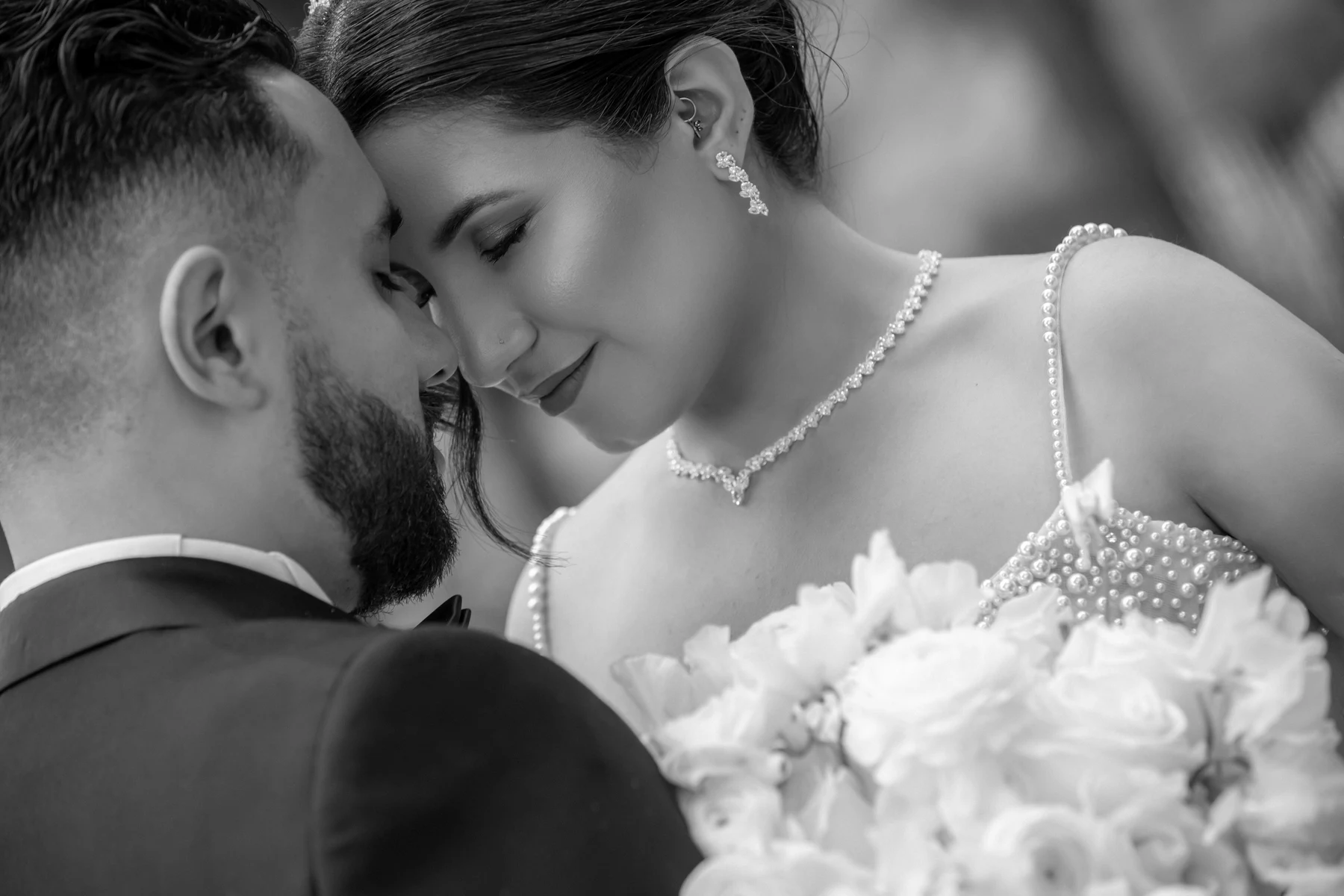
Should you do a grand exit at your Los Angeles wedding? Yes. I have photographed and filmed weddings here for 17 years, and the grand exit is the one reception moment that pays off almost every time, as long as you plan it the way I describe below. But here is the part most couples do not hear until the week of the wedding: the grand exit you see in portfolios is almost never the real departure. It is staged, it happens around 9:30 PM, and the couple walks back inside afterward to keep dancing. That one change is the difference between a great photo and a blurry one in a half-empty parking lot.
I'll be blunt: a real midnight exit photographs badly
Most photographers won't say this at the consultation, but a true end-of-night exit is one of the weakest photo opportunities of the entire day. By midnight your guest list has thinned to twenty people, half of them are holding car keys, the band has packed up, and your photographer left two hours ago because most LA photographers leave receptions between 9:30 and 10:30 PM. What is left is a tired couple, a scattered line of guests, and a venue coordinator checking her watch because the noise curfew hit at 10.
So when a couple tells me they want sparklers, my first question is not what kind. It is what time. I push for a staged exit around 9:30 PM, roughly 90 minutes before the reception actually ends. Everyone is still there. The energy from open dancing is still in the room. The DJ announces it, guests file out, you run the tunnel, I shoot it, you kiss at the end, and then you go right back inside for another hour of dancing. Your guests love it because nobody has to leave, and you love it because the pictures look like the ones that made you want an exit in the first place.
What actually happens during a staged exit
Here is the sequence I run at almost every Los Angeles wedding that includes an exit. It takes about twelve minutes from the DJ announcement to the last photo.
- Minute 0: DJ announces the exit while you two slip to a side room. Your coordinator or a designated friend hands out sparklers, ribbon wands, or whatever you have chosen.
- Minutes 1 to 4: Guests line up in two rows facing each other. I set the width of the tunnel, usually about six feet, wide enough that you walk, not squeeze. I put the tallest guests near the far end so the line does not block my view of your faces.
- Minutes 4 to 6: For sparklers, we light the ones at the far end first, then work back toward the door. A 36-inch sparkler burns for roughly three to four minutes. A 20-inch one burns for about ninety seconds, which is not long enough for 120 guests to get lit, so I tell couples to buy the long ones.
- Minute 6: You walk out. Not run. Walking gives me three or four usable frames in the tunnel. Running gives me one, usually with your eyes closed.
- Minute 7: You stop at the end of the tunnel and kiss, and the guests close in behind you. That is the portfolio shot, and it only exists if you stop.
- Minutes 8 to 12: Sparklers go into sand buckets, you walk back in, the DJ drops the next song, and the night continues.
How I photograph it: the technical side in plain English
A sparkler exit is a photo of two people lit by fire in near darkness. That is a harder shot than it looks, and it is where I see the most mistakes from less experienced shooters. Here is how I handle it.
I shoot it with flash, from the front, walking backward. Sparklers alone put out enough light for a moody, orange frame, but your faces will be dim and the moment you move, you blur. I use an on-camera flash dialed down low with a small diffuser, which freezes you and keeps the sparklers glowing behind you. My typical settings are f/2.8, 1/200 of a second, and ISO 1600 to 3200. Some photographers skip the flash for a more "natural" look. In my experience that works for exactly one frame out of thirty.
I bring a second light. When I am shooting with a second photographer, I put them at the end of the tunnel with a flash pointed back toward me, which adds a rim of light around your hair and shoulders and separates you from the crowd. It is a small thing that makes the photo look expensive. When I am the only photographer, I place a flash on a stand behind the last guest instead.
I pick the backdrop before the sun goes down. The exit should happen somewhere with a dark, clean background: the venue's front doors, a tree-lined driveway, a lawn with the lights of the city behind it. Not a parking lot, not a dumpster corral, not a brightly lit street. I scout this during the cocktail hour and I will tell your coordinator exactly where the tunnel needs to form.
Video needs its own plan. Since ConneryFilm shoots photography and cinematography under one roof, my film side is already in position when the exit starts instead of elbowing my photo side for the same spot. The video camera goes to one side of the tunnel on a gimbal, tracking you through it, while the photo camera stays in front. When two separate companies try to do this, they end up in each other's frame. I have watched it happen, and the fix is usually that the videographer gives up and shoots from behind, which is the worst angle for an exit.
Sparklers, bubbles, confetti or lanterns: what works in LA
Los Angeles has specific rules and specific light, so not every exit idea works here.
Sparklers are the best-looking option and the most restricted. Many LA venues do not allow them at all, and nearly all outdoor venues in the hills, Malibu and the Santa Monica Mountains ban them outright during fire season, which now runs from roughly May through November, depending on the year. Always ask the venue in writing. If they say yes, buy 36-inch smokeless sparklers, two per guest, and have at least four metal sand buckets at the end of the tunnel. I have seen one spent sparkler dropped into a plastic trash can start a small fire at a Pasadena estate. It was out in seconds but it ended the night.
Confetti and flower petals photograph beautifully in daylight and poorly at night, because flash lights the nearest pieces into bright white blobs. If you want petals or dried flowers, I suggest a daytime "ceremony exit" instead, right after the recessional, when the sun is still out. Also, most LA venues charge a cleanup fee for confetti, often $150 to $500.
Bubbles are the safest option and they look fine, but they are small and they drift. In a 10 mph evening breeze at a Malibu venue they are gone before I can frame them. They suit a smaller daytime exit better.
Ribbon wands and streamers are my recommendation when sparklers are banned. They are visible in a flash photo, guests can wave them for as long as you need, there is nothing to light or extinguish, and they look festive on video, where movement matters more than light.
Cold spark fountains are the big-budget version. Rental runs about $400 to $900 for two machines and an operator, and because the sparks are cold they are allowed at some venues where real sparklers are not. They look spectacular on film. The one catch is the smoke: in a still courtyard it hangs in the air and softens every photo after the first ten seconds.
Sky lanterns are illegal in California. I get asked every year, and the answer is no.
What I'd do if it were my wedding
I would do a staged sparkler exit at 9:30 PM if the venue allowed it, and ribbon wands if it did not. I would make it the last thing my photographer shoots before they leave, which is why eight to ten hours of coverage is usually the right number for a couple who wants an exit: the morning and the exit are the two ends of the day, and you cannot cover both with six hours. I would skip the real departure photo entirely and let the last hour be ours.
And honestly, I think a grand exit is worth more as a video moment than a photo moment. The still photo is lovely, but the ten seconds of film of you two laughing through a tunnel of people who love you, with the cheering in the audio, is the clip my couples replay most. If you are deciding between a photographer-only exit and no exit at all, do the exit. If you are deciding whether to add film to your day, this moment is a strong argument for it.
Timing it into the rest of the night
A staged exit needs a slot in your reception timeline, and it competes with the other late-night moments. My usual order for an LA reception that ends at 11 PM looks like this: dinner wraps by 8:15, toasts and parent dances by 8:45, open dancing from 8:45, cake cutting at 9:15, grand exit at 9:30, and then open dancing again until the end. That order puts the exit right after the cake, when every guest is already standing and near the dance floor, so lining them up takes two minutes instead of ten. It also means I have already captured a full hour of dance floor photos before I leave.
If your venue has an early curfew, which is common at residential estates in Beverly Hills, Hidden Hills and parts of the Valley, where amplified music often has to stop at 10 PM, then the staged exit becomes the real exit and that is fine. The guests are all still there because the night is only two hours old.
Five mistakes I see most often
- Buying short sparklers. Ten-inch cake sparklers burn out in 30 seconds. By the time the last guest is lit, the first is holding a wire.
- Nobody in charge of lighting them. Assign two people with long-reach lighters or a butane torch. Matches do not work in any breeze at all.
- Running through the tunnel. Walk. Look at each other. Stop at the end and kiss.
- Letting the guests close the tunnel in. Guests drift inward as they get excited. I call out the width twice before you come out.
- Scheduling it after the photographer leaves. Check your contract's end time against your exit time. If they do not match, either move the exit or add an hour.
Frequently asked questions
Do I need a permit for sparklers in Los Angeles?
You do not need a city permit, but you do need the venue's written permission, and many venues require it to be in your contract. Some also require a fire marshal sign-off or a fire watch staff member, which can add $150 to $300 to your venue bill.
How many sparklers should I buy?
Two 36-inch sparklers per guest, and plan for about 70 percent of your guests to participate. For a 120-guest wedding that is roughly 170 sparklers, which runs $120 to $200 online.
How long does the grand exit take?
About twelve minutes from the announcement to the last photo, and about three minutes of that is the actual walk. Budget fifteen minutes on your timeline so nobody feels rushed.
Can you photograph a grand exit without flash?
I can, and I will usually grab a few frames that way for the candlelit look, but the keepers are almost always the flashed frames. Without flash, any movement blurs your faces, and the sparklers overpower everything else in the shot.
Is a daytime ceremony exit better than a night reception exit?
They are different photos. A daytime exit right after the ceremony with petals or dried flowers gives you bright, colorful images with every guest in them. A night exit with sparklers gives you the dramatic shot. Plenty of my couples do both, and the daytime one takes only five minutes.
Does the grand exit count toward my photography hours?
Yes. Everything I shoot is within your contracted hours. A staged exit at 9:30 PM typically fits inside a package that starts around 1 PM, which is why I plan the exit time and the start time together at our final meeting.
If you are planning a Los Angeles wedding and want the exit, the dance floor and the quiet morning all covered by one team that handles both the photos and the film, I would love to talk through your timeline with you. Call or text 818.749.7039 or visit ConneryFilm.com to see recent weddings and check your date.
Meet the Author: Connery Davoodian Hello, I'm Connery Davoodian, the visionary behind ConneryFilm, and I'm thrilled to share insights from my 17-year journey through the world of wedding photography and videography. My passion extends beyond simply capturing images; it's about artfully weaving your unique love story into a timeless, cinematic masterpiece. My artistic path began long before I ever picked up a camera, deeply rooted in music as a singer, songwriter, and multi-instrumentalist. This diverse background in directing, producing, and editing has cultivated a unique perspective, allowing me to approach each wedding not just as an event, but as a dynamic narrative waiting to be beautifully told. This blend of technical mastery and creative storytelling is the heartbeat of ConneryFilm, ensuring that every frame, every shot, and every film is infused with depth, emotion, and unparalleled artistic integrity. At ConneryFilm, we believe your wedding memories deserve nothing less than bespoke luxury. My philosophy centers on capturing the authentic, unscripted moments – the genuine smiles, the tender glances, the joyful laughter – that truly define your day. While we obsess over exquisite details and sophisticated aesthetics, our true joy comes from making you feel completely at ease, like a "friendor" who genuinely celebrates alongside you. This calm, organized presence allows your true personalities to shine, resulting in images and films that are as real and vibrant as your love itself. Based in the heart of Los Angeles, California, my team and I are privileged to serve couples across the globe, bringing our signature high-end wedding photography and videography to destination weddings worldwide. Through these blog posts, I aim to share invaluable insights, luxurious inspiration, and practical, fun advice to guide you through your wedding planning journey, helping you make informed decisions about preserving your most cherished moments. Thank you for trusting ConneryFilm to be a part of your extraordinary adventure. I'm excited to share my knowledge and passion with you, helping you create memories that will last forever.