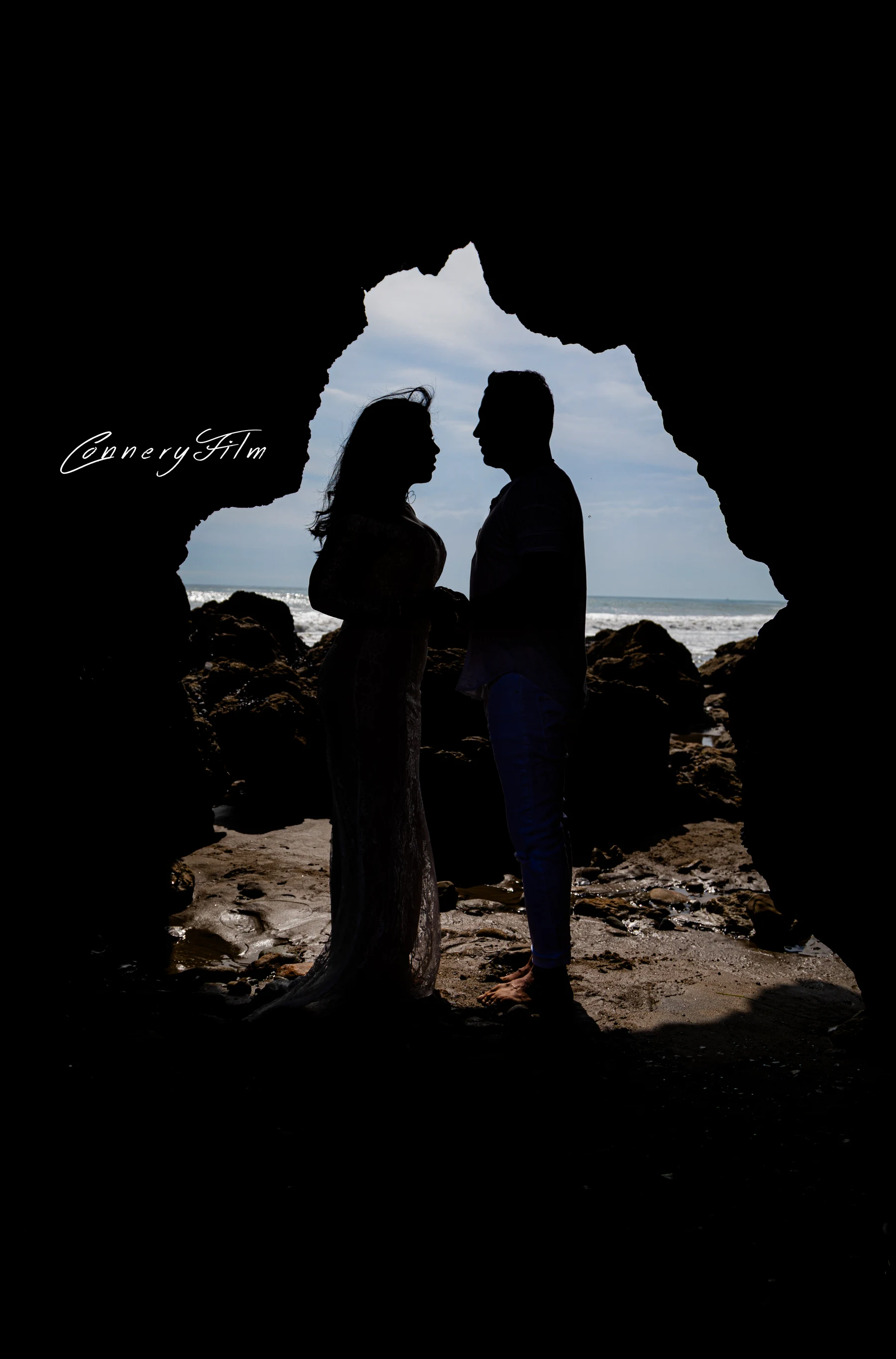
I'll give you the answer before the explanation. Hotel room lighting matters for getting-ready photos because the room is the only light source I can't move, and I'm in it for 90 minutes to two hours of your wedding day. At a Los Angeles wedding that is often a fifth of everything I shoot. Your ceremony has the sun. Your reception has a lighting designer. Your hotel room has whatever window the front desk happened to assign you, plus six lamps that are all a different shade of orange.
After 17 years of photographing and filming weddings around this city, I can usually tell within ten seconds of walking in whether the morning will be easy or a fight. It comes down to three things: how much window light there is, which direction it comes from, and how many other light sources are competing with it.
What bad hotel light actually does to a photo
Most couples think of light as bright or dark. That is the least important part. A modern camera handles a dim room without much trouble. What it can't fix is light that is the wrong color or coming from the wrong direction.
Here is what goes wrong, in the order I see it most:
- Mixed color. Window daylight sits around 5,500 Kelvin, which reads as clean and neutral. Hotel lamps sit around 2,700 to 3,000 Kelvin, which reads as orange. When both hit your face at once, one cheek goes blue and the other goes amber. I can correct one color in editing. I can't correct two on the same face without the skin looking like plastic.
- Overhead light. Recessed ceiling cans point straight down. They put shadows in your eye sockets and under your nose and chin, and they make a fresh makeup application look heavier than it is.
- Bathroom vanity light. This is where makeup artists naturally want to set up, because there is a mirror and a counter. It is also the worst light in the room: a small tiled box, often with greenish LED strips, and no window.
- Backlight with nothing in front. A huge window behind you and nothing lighting your face gives me a silhouette. Lovely once. Not for two hours.
None of these ruin a morning. All of them slow me down, and time is the thing you have least of before a ceremony.
Why one good window beats a beautiful suite
I'll be blunt: I would rather shoot in a plain standard room with one big clean window than in a $1,200-a-night suite with dark wood paneling and heavy drapes. Couples book for the furniture. I'm looking at the glass.
Window light is flattering because the window is large compared to your face. A large source wraps around your features and softens skin by itself, with no retouching. Put a sheer curtain over it and it gets softer again. That is the whole reason getting-ready photos in magazines look the way they do. It isn't a filter. It is a person standing three to five feet from a big window, turned about 45 degrees toward it.
Distance matters more than people expect. Light from a window falls off fast. At three feet from the glass you look luminous. At twelve feet, on the far side of the bed, I've lost most of that light and the lamps have taken over. So when I ask your makeup artist to move her chair six feet closer to the window, I'm not being fussy. That six feet is the difference between the photo you saved on Pinterest and one that looks like a snapshot.
If you haven't booked the room yet, I wrote a separate guide on where to get ready and how to pick the window that goes through the choice between a hotel, a home and a rental.
The direction your room faces changes the whole morning
This is the part nobody tells you when you book, and in Los Angeles it matters a lot because we get so much direct sun.
- North-facing rooms never get direct sun. The light is soft and even from morning to late afternoon. If I could pick for you, I'd pick this every time.
- East-facing rooms get hard, direct sun in the morning and turn soft by late morning. For a typical 4:30 pm ceremony, with hair and makeup running from about 10 am to 2 pm, that works well.
- South-facing rooms are bright most of the day. Sheer curtains solve nearly all of it.
- West-facing rooms are calm in the morning, then get blasted by direct sun from about 2 pm on. That is exactly when most brides step into the dress. Without sheers, I get hot stripes of light across the gown and squinting eyes.
Floor height counts too. In Downtown LA, a room on the 6th floor may look straight into the building across the street and sit in shade all day, while the same room on the 20th floor is flooded with light. On the coast in Santa Monica or Malibu, the marine layer often covers the sun until late morning, which turns the entire sky into one giant soft light. I love those mornings. In Pasadena or Beverly Hills, older properties tend to have smaller windows and deeper rooms, so I plan to work closer to the glass.
What I do in the first ten minutes
When I walk into the room, before I take a single photo of you, I do the same five things. You can do most of them yourself before I arrive.
- Open every curtain. Blackout drapes all the way back, sheers left closed if the sun is direct.
- Turn off every lamp and ceiling light. This feels wrong. The room looks darker to your eye. To the camera it suddenly looks clean, because there is only one color of light left.
- Move the makeup chair to the window. Facing the glass, about three to five feet back. Your makeup artist gets better light to work in as well, and the color she sees is the color the camera sees.
- Clear the window wall. Suitcases, room service trays, garment bags and water bottles go into the closet or the bathroom. Five minutes of tidying saves me from cropping every frame.
- Find the dress spot. I look for where the dress can hang in open light, and where you can stand to put it on without a television or a minibar behind you.
If your morning is running on a tight schedule, the 2.5 to 3 hour getting-ready timeline I use builds this setup time in, so nobody is rushed.
When the room really is dark
Sometimes there is nothing to work with. An interior-facing room, a small window onto an air shaft, a December wedding where the light is fading by 3:30 pm. It happens, and it is not a disaster.
I carry my own lighting to every wedding: a flash I bounce off a white wall or ceiling to imitate window light, and a small daylight-balanced LED panel with a soft diffuser. The LED matters most for film. A flash is no use to a video camera, and this is where having photography and cinematography under one roof at ConneryFilm helps in a practical way. My photo and film sides plan the light together, so I'm not setting up a flash that ruins the video take or a video light that throws a second color into the photos. With two separate vendors who met that morning, I've watched each one quietly undo the other's setup.
Added light costs time, though. Count on 10 to 15 extra minutes, and tell me ahead of the day if you already know the room is dark. A phone photo of the room taken at the same hour you'll be getting ready is the single most useful thing you can send me the week before.
What I'd do if it were my wedding
Honestly, I think couples overspend on the suite and underthink the request. If it were my wedding, I'd do four things, and none of them cost extra.
- Call the hotel when booking and ask for a high floor with the largest window they have, facing north or east.
- Ask whether the windows have sheer curtains as well as blackout drapes.
- Ask the makeup artist in advance to set up by the window, not in the bathroom. Most are glad to. Good artists already prefer daylight, and I cover what works on camera in my hair and makeup tips for photos.
- Give one bridesmaid the job of keeping the window side of the room clear.
A hotel can't always guarantee a room type, but a polite request on the reservation, repeated at check-in, works more often than you'd think.
Questions couples ask me about hotel room light
Should the lamps really be turned off for getting-ready photos?
Yes, in almost every room with a usable window. One color of light gives clean, natural skin tones. I turn a lamp back on only when I want it as a warm accent in the background, well away from your face.
What time of day is hotel room light best?
For soft light, late morning through early afternoon in an east- or north-facing room. In a west-facing room, the light is easiest before about 2 pm, so I try to finish the dress and portraits by then or shoot through closed sheers.
Does getting-ready coverage cost extra?
It comes out of your coverage hours and isn't a separate fee. My photography starts at $1,599, cinematography at $1,799, and photography with cinematography together at $3,500. Most couples set aside 90 minutes to two hours of that coverage for the morning.
Can you fix bad hotel lighting in editing?
Partly. I can correct a single color cast and lift shadows. I can't cleanly repair two different light colors on one face, or deep eye shadows from overhead cans. Fixing the light in the room takes two minutes. Fixing it in editing takes hours and never looks as good.
Is a bigger room better for photos?
Only for space. With six bridesmaids, two artists and a film crew, a 300-square-foot room gets tight quickly, and a suite helps with that. For the light itself, window size and direction matter far more than square footage.
If you're choosing a hotel right now and want a second opinion on the room, send me the listing or a phone photo and I'll tell you honestly what I see. Call or text 818.749.7039, or look through real getting-ready galleries and films at ConneryFilm.com. I'd love to hear about your day.
Meet the Author: Connery Davoodian Hello, I'm Connery Davoodian, the visionary behind ConneryFilm, and I'm thrilled to share insights from my 17-year journey through the world of wedding photography and videography. My passion extends beyond simply capturing images; it's about artfully weaving your unique love story into a timeless, cinematic masterpiece. My artistic path began long before I ever picked up a camera, deeply rooted in music as a singer, songwriter, and multi-instrumentalist. This diverse background in directing, producing, and editing has cultivated a unique perspective, allowing me to approach each wedding not just as an event, but as a dynamic narrative waiting to be beautifully told. This blend of technical mastery and creative storytelling is the heartbeat of ConneryFilm, ensuring that every frame, every shot, and every film is infused with depth, emotion, and unparalleled artistic integrity. At ConneryFilm, we believe your wedding memories deserve nothing less than bespoke luxury. My philosophy centers on capturing the authentic, unscripted moments – the genuine smiles, the tender glances, the joyful laughter – that truly define your day. While we obsess over exquisite details and sophisticated aesthetics, our true joy comes from making you feel completely at ease, like a "friendor" who genuinely celebrates alongside you. This calm, organized presence allows your true personalities to shine, resulting in images and films that are as real and vibrant as your love itself. Based in the heart of Los Angeles, California, my team and I are privileged to serve couples across the globe, bringing our signature high-end wedding photography and videography to destination weddings worldwide. Through these blog posts, I aim to share invaluable insights, luxurious inspiration, and practical, fun advice to guide you through your wedding planning journey, helping you make informed decisions about preserving your most cherished moments. Thank you for trusting ConneryFilm to be a part of your extraordinary adventure. I'm excited to share my knowledge and passion with you, helping you create memories that will last forever.