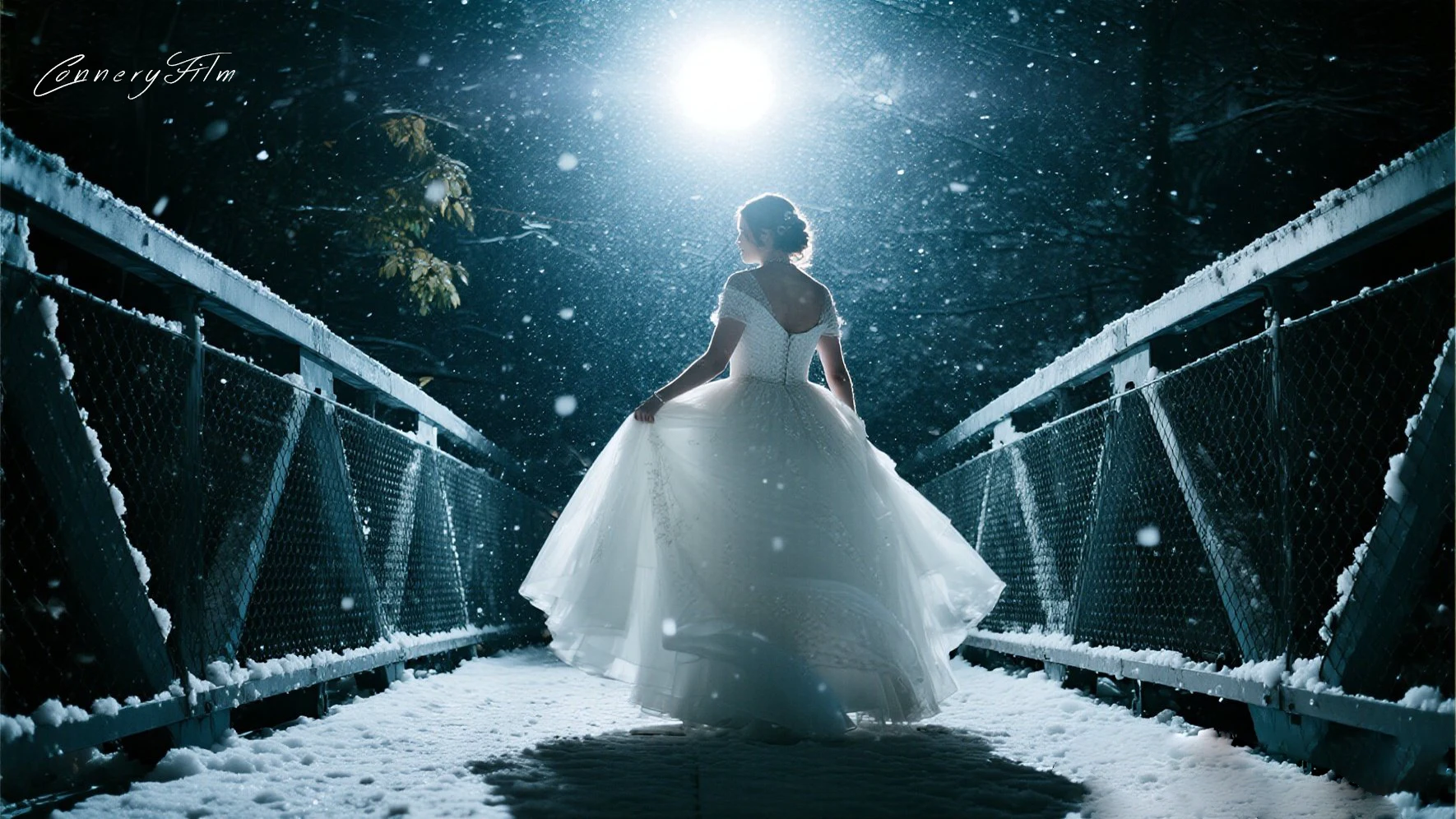
Here's the short answer to how you write a wedding photography timeline your photographer will love: build it backward from sunset, fit it on one page, put a real time and a real location on every line, and pad every transition with 15 minutes nobody is allowed to spend. That's it. After 17 years of shooting weddings around Los Angeles, I can tell you the timelines I love are almost never the long ones. They're the honest ones.
I get sent a lot of timelines. Some are beautiful color-coded spreadsheets with 90 rows. Some are a text from the bride's sister that says "ceremony at 4ish." Neither one helps me much. What I actually need is a document that tells me where the light will be, where you'll be, and who I need standing in front of my camera at each moment. Let me walk you through how I'd write it if it were my own wedding.
Start with the one time you can't move: sunset
Every timeline I build starts with a single number. Not the ceremony time. Not the dinner time. Sunset. Look it up for your exact date, write it at the top of the page, and work backward from there.
The reason is simple: the most flattering light of your entire day is the 30 to 45 minutes before the sun drops, and in Los Angeles that window is short. In late June, sunset is around 8:05 PM, which gives you a very relaxed evening. In late November and December it's closer to 4:45 PM, which means your couple portraits may need to happen before the ceremony, or your ceremony needs to start by 2:30. In October, my favorite month to shoot here, sunset lands around 6:15 to 6:40 depending on the week. I wrote a whole piece on the sunset-minus-90-minutes rule, but the gist is this: if your couple portraits aren't anchored to the light, every other part of the schedule is just guessing.
Once sunset is on the page, I place couple portraits at roughly sunset minus 45 minutes, family photos before that, and the ceremony before that. Then I fill in the morning.
What a timeline I'd love actually looks like
Here's a sample for an October Saturday at an estate venue in the Santa Monica Mountains, with a first look, 140 guests and sunset at 6:20 PM. I use something close to this at consultations, then adjust for each couple.
- 12:30 PM - I arrive at the getting-ready suite. Details laid out on one table: rings, invitation suite, shoes, perfume, vow books.
- 1:00 PM - Candid getting-ready coverage. Hair and makeup should be finishing, not starting.
- 2:15 PM - Dress on. Parent or best friend reveal.
- 2:45 PM - First look in a shaded spot we picked in advance.
- 3:00 PM - Couple portraits, round one (20 minutes).
- 3:20 PM - Wedding party photos (25 minutes).
- 3:45 PM - Buffer. Water, touch-ups, bathroom, hide before guests arrive.
- 4:30 PM - Ceremony (25-30 minutes).
- 5:00 PM - Family formals right at the ceremony site (25 minutes, about 12 groupings).
- 5:30 PM - Cocktail hour starts; I grab detail shots of the reception room before anyone sits down.
- 5:35 PM - Golden hour couple portraits (sunset minus 45 minutes), back by 6:00.
- 6:30 PM - Grand entrance, first dance, welcome toast.
- 7:00 PM - Dinner. I eat when you eat.
- 7:45 PM - Toasts, parent dances.
- 8:15 PM - Cake cutting, then open dancing.
- 8:45 PM - Ten minutes of night portraits with string lights or off-camera flash.
- 9:00 PM - Coverage ends after two to three songs of a full dance floor.
Notice what's in there: about eight and a half hours of coverage, two short portrait sessions instead of one long one, and blank space before the ceremony. That blank space is the most valuable line on the whole page.
Five things I want to see on every line
A timeline is a working document for your vendors, not a mood board. When I open one, I'm scanning for five things.
- A start time and an end time. "Portraits: 3:00" tells me nothing. "Portraits: 3:00-3:20" tells me how much I can do.
- An exact location. "Bridal suite, 2nd floor" or "the oak tree by the north lawn." At big venues like the Huntington or a Malibu estate, a five-minute walk between spots adds up fast.
- Who has to be there. If your grandmother needs to be at family photos at 5:00, put her name on the line, and tell whoever is driving her.
- Travel time as its own line. If getting ready is in a Beverly Hills hotel and the ceremony is in Pasadena, that's 40 minutes on a Saturday afternoon on a good day, and 70 on a bad one. Write it down, then add 20.
- A point person and a phone number. Usually your planner or a calm friend who knows both families. Not you.
I'll be blunt: hair and makeup will run late
Most photographers won't say this so plainly, but in 17 years, hair and makeup has run behind schedule at the majority of weddings I've shot. Not because anyone is bad at their job, but because a bridal party of six people, plus moms, takes longer than anyone estimates. When it runs 30 minutes late, the time doesn't vanish. It gets stolen from the first look, then from the wedding party photos, then from your portraits.
So here's my rule: ask your hair and makeup team how long they need, then have the bride's final look finish 30 minutes before the dress goes on, not at the moment it goes on. And put a 15-minute buffer between every major block of the day. You will use most of them. If you don't, you get to sit down and drink water, which nobody does on their wedding day anyway.
Family photos: the part of the timeline that eats the clock
The single most common thing I see go wrong at Los Angeles weddings is the family photo block. Couples write "family photos: 15 minutes" and then hand me a list of 30 combinations. That's not going to happen in 15 minutes. Realistically, each grouping takes about two minutes once people are standing in the right spot, and much longer if Uncle Mike has wandered off to the bar.
Keep the list to 10 to 15 groupings and write them in an order that builds up and then peels away, so people step in and out instead of reshuffling. I put together a list of the family photo groupings I recommend that most couples can copy almost directly. Then attach that list to the timeline, and send it to everyone who appears on it, a week ahead. Tell them to stay at the ceremony site after you walk back up the aisle. That one sentence saves me ten minutes every time.
First look or not changes the whole shape of the day
Honestly, I think a first look is the best scheduling decision most Los Angeles couples can make, especially from October through February when the light disappears early. It lets us finish couple portraits and wedding party photos before the ceremony, which means you get to go to your own cocktail hour.
If you skip it, that's completely fine, and many of my couples do. But the timeline has to change. All couple, wedding party and family photos now happen in the window between the ceremony and the reception, so you'll need roughly 75 to 90 minutes there. Either make cocktail hour longer, or accept that you'll miss most of it. What doesn't work is skipping the first look and keeping a one-hour cocktail hour with sunset at 4:50. I've seen it. Somebody's portraits get cut to eight minutes in the dark.
Photo and video on the same page
If you're hiring a videographer too, your timeline needs to account for them, and it's one of the reasons I run ConneryFilm as photography and cinematic film under one roof. When the photo and video teams are one team, we plan the day together and you only send the timeline once. We know who stands where during the vows, who takes the wide shot during the first dance, and who grabs the audio for toasts. With two separate vendors, I've watched a photographer and videographer politely take turns on a 20-minute portrait session, which effectively gives each of them ten.
Whoever you hire, add two lines for video: a moment to put a microphone on the officiant and groom before the ceremony, and a five-minute window for any letter readings or private vows you want filmed.
The details people forget to put on paper
These small lines make a timeline go from good to genuinely useful:
- Vendor meals. Schedule them to be served at the same time as yours, so we're back on our feet when toasts start.
- Exits and sparklers. Note the exact time. If it's after my coverage ends, either extend or move it.
- Cultural traditions. A Persian sofreh, a tea ceremony, a hora, a baraat. Give each one its own line, a realistic length, and the names of who's involved.
- Getting-ready room light. Ask for a room with a big window, and keep it tidy. I'll move a lamp, but I can't make a dark hotel room bright.
- Your coverage end time. Know how a realistic full-day LA timeline plays out before you choose hours, so the last dance doesn't happen after I've packed up.
When to send it, and who should get it
I ask for a draft about four weeks before the wedding and a final version at two weeks. That gives us time for a 20-minute call to walk the day, scout the light at the venue if needed, and catch problems like a ceremony facing directly into the afternoon sun. Send the final version to every vendor, your wedding party and anyone named on the family list. Print five copies for the day: your planner, me, the DJ, the venue coordinator and your maid of honor.
And then, the most important part: let go of it. Once the timeline is written and shared, your job on the day is to be present. My job, and your planner's, is to keep you on it.
FAQ
How many hours of photography should my timeline plan for?
Most Los Angeles weddings with 100 to 180 guests fit comfortably in 8 hours, starting about two hours before the dress goes on and ending after a few songs of open dancing. Micro weddings under 60 guests often need only 4 hours.
How long should couple portraits take on the timeline?
Plan 20 minutes after a first look plus another 15 to 20 minutes at golden hour, roughly 45 minutes total. Without a first look, plan 30 to 40 minutes in one block after the ceremony.
What time should my photographer arrive?
About two hours before you put on the dress, so there's time for details, candid getting-ready moments and the reveal. I go into more depth on photographer arrival times separately.
Should the timeline include buffer time?
Yes. I recommend 15 minutes between every major block and 30 extra minutes after hair and makeup. Buffers are what keep a late morning from destroying your sunset portraits.
What does a ConneryFilm wedding cost?
Small events under 60 guests start at $899 for up to 4 hours of photography. Full wedding photography starts at $1,599, cinematography at $1,799, and photography and cinematography together from $3,500, and I help every couple build their timeline as part of booking.
If you'd like a second pair of eyes on your timeline, or you want me to build one around your venue and your sunset, I'd love to help. Call or text 818.749.7039, tell me your date and venue, and we'll map out a day that actually breathes. You can see our work and packages at ConneryFilm.com.
Meet the Author: Connery Davoodian Hello, I'm Connery Davoodian, the visionary behind ConneryFilm, and I'm thrilled to share insights from my 17-year journey through the world of wedding photography and videography. My passion extends beyond simply capturing images; it's about artfully weaving your unique love story into a timeless, cinematic masterpiece. My artistic path began long before I ever picked up a camera, deeply rooted in music as a singer, songwriter, and multi-instrumentalist. This diverse background in directing, producing, and editing has cultivated a unique perspective, allowing me to approach each wedding not just as an event, but as a dynamic narrative waiting to be beautifully told. This blend of technical mastery and creative storytelling is the heartbeat of ConneryFilm, ensuring that every frame, every shot, and every film is infused with depth, emotion, and unparalleled artistic integrity. At ConneryFilm, we believe your wedding memories deserve nothing less than bespoke luxury. My philosophy centers on capturing the authentic, unscripted moments – the genuine smiles, the tender glances, the joyful laughter – that truly define your day. While we obsess over exquisite details and sophisticated aesthetics, our true joy comes from making you feel completely at ease, like a "friendor" who genuinely celebrates alongside you. This calm, organized presence allows your true personalities to shine, resulting in images and films that are as real and vibrant as your love itself. Based in the heart of Los Angeles, California, my team and I are privileged to serve couples across the globe, bringing our signature high-end wedding photography and videography to destination weddings worldwide. Through these blog posts, I aim to share invaluable insights, luxurious inspiration, and practical, fun advice to guide you through your wedding planning journey, helping you make informed decisions about preserving your most cherished moments. Thank you for trusting ConneryFilm to be a part of your extraordinary adventure. I'm excited to share my knowledge and passion with you, helping you create memories that will last forever.