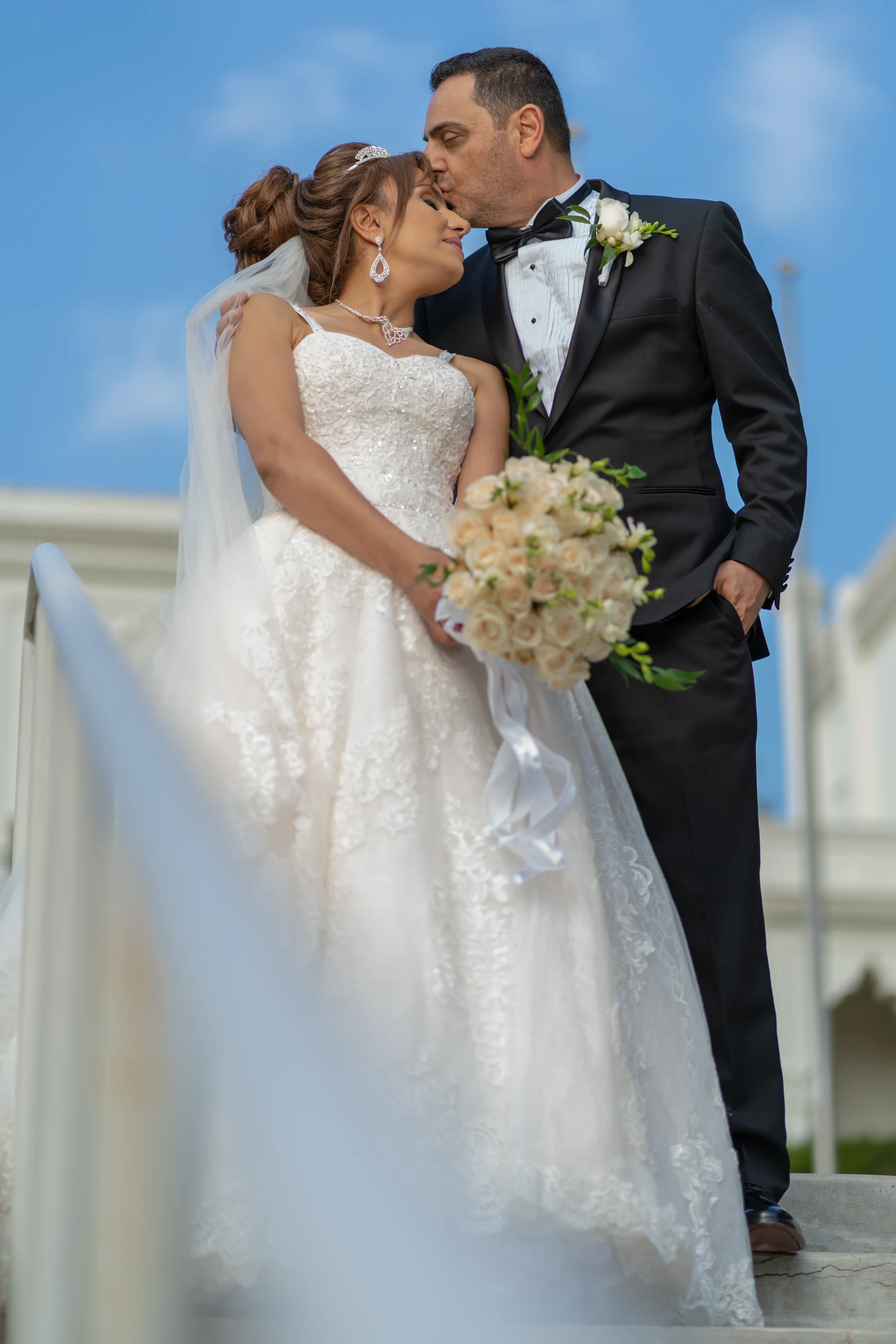
Here's the short answer I give every couple who asks me about wedding cinematography vs videography in Los Angeles: they're the same job with a different philosophy. Both mean a person with a camera recording your wedding. The difference is what happens before the shutter rolls and, mostly, what happens in the edit afterward. Videography records what happened. Cinematography tells you how it felt.
That's the honest version. The marketing version is that "cinematography" is a premium word, and plenty of vendors in LA have swapped it onto their websites without changing a single thing about how they work. So let me walk you through what the difference actually looks like on a real wedding day, what it costs here, and how to tell which one you're really being sold.
I've been called both, and I do the same job
I've been shooting weddings for 17 years. In the early days, everyone called me a videographer. Somewhere around 2014, couples started asking whether I was a "cinematographer," and I realized the word had shifted from a film-set job title to a style of wedding video. On a movie set, the cinematographer is the director of photography, the person responsible for light, lens choice and camera movement. At a wedding, one person usually does all of it, plus the audio, plus the editing.
So when you see "wedding cinematographer" on a website, read it as a promise about style: shallow depth of field, deliberate composition, moody color, a story-driven edit set to music, often with vows or speeches woven in as narration. When you see "wedding videographer," it may mean the same thing, or it may mean a more traditional approach: longer takes, full ceremony and speeches, minimal music, a chronological record.
Neither word guarantees anything. I've seen "cinematographers" deliver flat, over-sharpened footage with a stock song slapped on top, and I've seen quiet "videographers" in the Valley hand over films that made me jealous.
What actually separates the two on a wedding day
If you set a cinematic shooter and a traditional videographer side by side at the same ceremony at, say, the Hummingbird Nest Ranch in Santa Susana, here's what you'd notice:
- Lenses. The cinematic shooter reaches for fast primes (35mm, 50mm, 85mm at f/1.4 to f/2) to blur the background and isolate faces. The traditional shooter often uses a zoom so nothing gets missed.
- Movement. Gimbals, slow push-ins, sliders, a handheld drift during the first look. A traditional shooter keeps the camera on a tripod for stability and coverage.
- Frame rate. Cinematic shooters capture at 24fps for the film look and switch to 60 or 120fps for slow motion on the veil, the ring, the champagne pour.
- Color. Log profiles, shot flat and graded in post. It takes longer but it's why cinematic films look warm and filmic instead of like a phone video.
- Audio as story. This is the one people underestimate. A good cinematic edit is built around sound: your vows, a line from the best man's toast, a letter you read to each other. That requires lav mics on the officiant and groom, a recorder on the podium, and backup audio from the DJ board.
- The edit. A traditional video is chronological. A cinematic film is structured like a short story, with a hook, a middle, and an emotional payoff, usually in 4 to 8 minutes.
Notice what isn't on that list: the camera body. I'll be blunt: gear is the fifth most important thing here, not the first. A $3,000 camera in the hands of someone who understands LA light will beat a $15,000 cinema rig every time.
The light is where you really see it
Los Angeles makes this easy to demonstrate. A 4 PM ceremony at a Malibu bluff venue means hard, overhead sun on faces and squinting guests. A traditional videographer records it as-is. A cinematographer plans around it: positions the couple so the sun backlights the veil, exposes for skin, and saves the big wide shots for the 20 to 25 minutes of golden hour right before the sun drops behind the Santa Monica Mountains or into the Pacific.
Same with a downtown rooftop. At the Ace Hotel or an Arts District loft, reception light after 7 PM gets ugly fast: mixed tungsten, uplighting, a DJ's LED bars flashing purple. A cinematic shooter brings a small LED panel, dials in white balance by hand, and leans into the practical light instead of fighting it. That's the craft. It's not about a label on a website.
What a cinematic wedding film costs in Los Angeles
Here are the real ranges I see in LA right now for wedding video, full day, one shooter unless noted:
- $1,500 to $2,500: Mostly documentary or traditional coverage, often 6 hours, a short highlight and basic full ceremony. Some newer shooters with a cinematic eye live here too, and they're worth finding.
- $2,800 to $5,000: The main band for a true cinematic film. 8 to 10 hours, a 4 to 8 minute highlight film, full ceremony and speeches, licensed music, proper audio.
- $5,000 to $9,500: Two cinematographers, drone where permitted, a longer feature film of 15 to 30 minutes, sometimes a same-day edit played at the reception.
If you want a deeper breakdown of what moves the price, I wrote up how LA wedding video packages compare side by side. The short version: you pay for editing hours. A cinematic highlight film takes me 40 to 80 hours in the edit. A straight chronological video takes a fraction of that. That's most of the price difference right there.
Turnaround follows the same logic. A cinematic highlight film usually lands in 8 to 12 weeks; a raw or lightly edited documentary cut can come faster.
Which one I'd pick if it were my wedding
Honestly, I think most couples want both, and they don't realize they can have it. The best wedding films I've delivered have a cinematic highlight you'll share with everyone and rewatch every anniversary, plus a documentary-style full ceremony and full speeches you'll watch maybe twice, but will be glad you have when you're 70 and your grandmother is gone.
If your budget forces a choice, here's how I'd decide:
- Go cinematic if you care about the feeling more than the full record, you'll share it online, and your venue has beautiful light or scenery (a Malibu estate, an Ojai ranch, a Pasadena garden).
- Go traditional/documentary if what matters most is the complete ceremony, every speech in full, and relatives who can't travel watching it back. A lot of the South Asian, Armenian and Persian weddings I've shot in LA lean this way, because the traditions themselves are the story. I explain that approach more in documentary wedding videography.
And I'll say something most videographers won't: if a vendor refuses to give you the full ceremony because it's "not cinematic," walk away. The highlight is the dessert. The ceremony is the meal.
How to spot fake "cinematic" work
The word is everywhere, so test it. At the consultation, ask to see a full wedding they shot, not a 90-second teaser. Then watch for these signs:
- Audio drops out during vows or speeches. Real cinematographers mic the officiant and have a backup recorder. If you can't hear the vows, they don't take audio seriously.
- Every film uses the same song and the same structure. That's a template, not storytelling.
- Skin looks orange or gray. Bad color grading is the fastest giveaway that someone is shooting log footage without knowing how to grade it.
- Too many drone shots and not enough faces. Your film should be about people.
- Nothing from the reception after dark. If every sample is golden hour, ask to see a 9 PM dance floor.
I go deeper on this in how to spot a real cinematic videographer in LA, including the questions I'd ask.
Why one team matters more than the label
Here's the part nobody talks about. Whether you hire a cinematographer or a videographer, the thing that ruins more wedding films than anything is the photographer and the video shooter getting in each other's way. Two separate vendors with two different timelines, each trying to own the first kiss aisle shot, each stepping into the other's frame during the first look.
That's why at ConneryFilm we do photography and cinematic film under one roof, with one team that plans the day together. The photographer knows where the gimbal is going to move; the cinematographer knows when the photographer needs ten quiet seconds for portraits. You get one timeline, one point of contact, and a gallery and a film that actually look like they came from the same wedding.
FAQ
Is wedding cinematography more expensive than videography?
Usually, yes. In Los Angeles a cinematic film typically runs $2,800 to $5,000 for full-day coverage, versus $1,500 to $2,500 for more traditional coverage. The gap is almost entirely editing time, not the camera.
Can I get a cinematic highlight and the full ceremony?
You should. Most good LA packages include a 4 to 8 minute cinematic highlight plus full ceremony and speeches. If yours doesn't, ask for it before signing; it's usually a modest add-on because the footage already exists.
How long is a cinematic wedding film?
A highlight film is usually 4 to 8 minutes. A longer feature or documentary edit runs 15 to 45 minutes. Teasers for social media are 60 to 90 seconds.
Do I need two shooters for a cinematic wedding video?
For under about 120 guests with a single-location ceremony, one experienced cinematographer with locked-off backup cameras is plenty. Past that, or if both of you are getting ready in different places, a second shooter is worth it.
Is "cinematic" just a buzzword?
Sometimes. It describes a real style of shooting and editing, but anyone can type it on a website. Watch a full film, listen to the vows, and look at the reception footage before you believe it.
If you're weighing cinematography against videography for your own LA wedding, I'm happy to show you full films from venues like yours and talk through what fits your day and your budget, no pressure. Call or text 818.749.7039, or see more of our photography and film work at ConneryFilm.com. I'd love to hear about your plans.
Still comparing studios? Here is how I would judge the best wedding videographers in Los Angeles.
Planning a wedding here? My Los Angeles wedding videographer page has full films and prices.
Meet the Author: Connery Davoodian Hello, I'm Connery Davoodian, the visionary behind ConneryFilm, and I'm thrilled to share insights from my 17-year journey through the world of wedding photography and videography. My passion extends beyond simply capturing images; it's about artfully weaving your unique love story into a timeless, cinematic masterpiece. My artistic path began long before I ever picked up a camera, deeply rooted in music as a singer, songwriter, and multi-instrumentalist. This diverse background in directing, producing, and editing has cultivated a unique perspective, allowing me to approach each wedding not just as an event, but as a dynamic narrative waiting to be beautifully told. This blend of technical mastery and creative storytelling is the heartbeat of ConneryFilm, ensuring that every frame, every shot, and every film is infused with depth, emotion, and unparalleled artistic integrity. At ConneryFilm, we believe your wedding memories deserve nothing less than bespoke luxury. My philosophy centers on capturing the authentic, unscripted moments – the genuine smiles, the tender glances, the joyful laughter – that truly define your day. While we obsess over exquisite details and sophisticated aesthetics, our true joy comes from making you feel completely at ease, like a "friendor" who genuinely celebrates alongside you. This calm, organized presence allows your true personalities to shine, resulting in images and films that are as real and vibrant as your love itself. Based in the heart of Los Angeles, California, my team and I are privileged to serve couples across the globe, bringing our signature high-end wedding photography and videography to destination weddings worldwide. Through these blog posts, I aim to share invaluable insights, luxurious inspiration, and practical, fun advice to guide you through your wedding planning journey, helping you make informed decisions about preserving your most cherished moments. Thank you for trusting ConneryFilm to be a part of your extraordinary adventure. I'm excited to share my knowledge and passion with you, helping you create memories that will last forever.